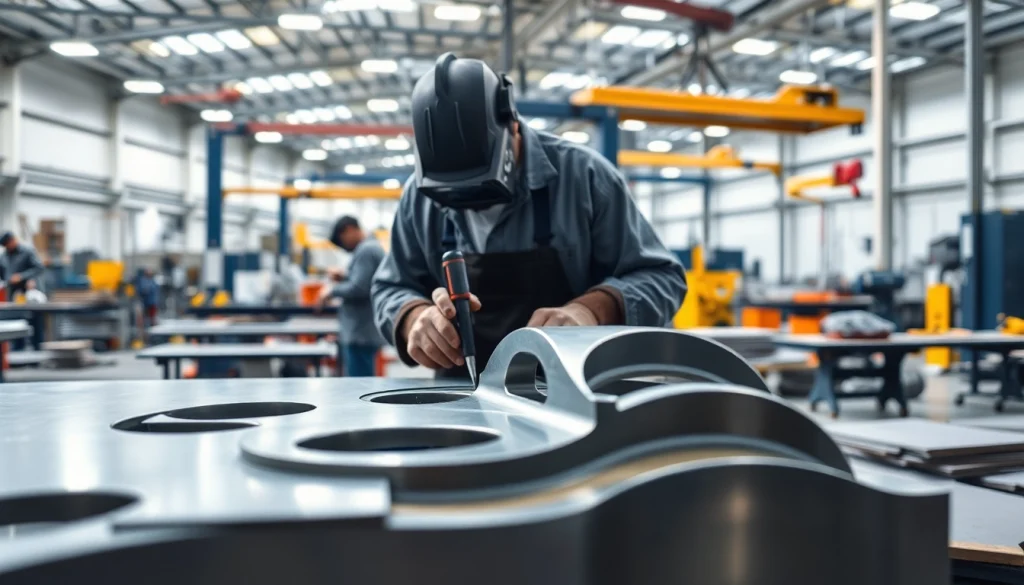
Understanding Custom Steel Fabrication
Custom steel fabrication is an essential process that adapts steel to meet specific design needs and requirements. This versatile manufacturing method combines mechanical engineering principles with modern technology to create products tailored for a range of industries, from construction to manufacturing. By utilizing custom steel fabrication, businesses can achieve remarkable precision, strength, and durability in their projects.
What is Custom Steel Fabrication?
Custom steel fabrication entails the conversion of raw steel into finished products or components that conform to precise specifications. This process often begins with a design concept, which is then transformed into detailed engineering drawings. Steel fabricators utilize various techniques—such as cutting, bending, welding, and assembling—to bring the designs to life while ensuring that each piece meets stringent quality standards.
Benefits of Custom Steel Fabrication for Businesses
The benefits of custom steel fabrication are manifold. Firstly, it allows for complete customization according to specific project needs, resulting in improved functionality and aesthetics. This tailored approach can lead to cost savings in the long run, as projects become more efficient and less prone to errors. Additionally, custom fabrication can enhance product strength and longevity, which is particularly crucial in industries subject to wear and tear.
Moreover, companies that partner with experienced steel fabricators can leverage advanced techniques and technologies that allow for greater precision in production. This often culminates in a competitive edge, as businesses can offer superior products that fulfill unique customer demands.
Key Materials Used in Steel Fabrication
Steel fabrication typically entails the use of various grades of steel, each selected for specific property requirements such as tensile strength, malleability, and resistance to corrosion. Common materials in the fabrication process include:
- Mild Steel: Known for its versatility, mild steel is ideal for a variety of projects due to its weldability and affordability.
- Stainless Steel: Valued for its corrosion-resistant properties, stainless steel is often used in environments where hygiene is paramount, such as food processing and medical applications.
- Alloy Steel: Incorporating other elements, alloy steel is engineered to provide certain mechanical properties, making it useful in construction and heavy-duty applications.
Essential Techniques in Custom Steel Fabrication
Welding Techniques and Their Applications
Welding is one of the primary methods employed in custom steel fabrication, connecting various steel components with great strength. There are several welding techniques, each suited for specific applications:
- MIG Welding (Metal Inert Gas): This process uses a continuous wire electrode and is favored for its speed and ease of use, making it ideal for thinner materials.
- TIG Welding (Tungsten Inert Gas): Known for its precision, TIG welding is perfect for applications requiring a clean and strong weld, particularly in stainless steel fabrication.
- Stick Welding (Shielded Metal Arc Welding): This traditional method is still widely used for its reliability in outdoor or challenging environments.
CNC Machining in Steel Fabrication
CNC (Computer Numerical Control) machining is a computer-controlled manufacturing process that allows for high precision and repeatability in steel fabrication. By programming cutting tools for specific tasks, CNC machines can execute intricate designs that would otherwise be challenging with manual techniques. The integration of CNC technology enhances production efficiency, reduces human error, and ensures consistent quality across batches.
Cutting Methods for Precision Fabrication
Accurate cutting is fundamental to effective steel fabrication. Various cutting methods are routinely employed, including:
- Laser Cutting: Utilizing focused laser beams, this method delivers precise cuts with minimal waste, making it suitable for complex designs.
- Plasma Cutting: This technique involves ionized gas to slit steel, known for its speed and efficiency, particularly on thicker materials.
- Waterjet Cutting: Employing high-pressure water mixed with abrasives, waterjet cutting provides a versatile, contamination-free process, ideal for thicker steel without altering its inherent properties.
Trends Impacting the Custom Steel Fabrication Industry
Emerging Technologies in Steel Fabrication
Rapid advancements in technology are shaping the future of custom steel fabrication. Technologies such as artificial intelligence and machine learning integrate into design processes to foster smarter production decisions. Automation in manufacturing continues to pave the way for the industry, creating opportunities to enhance efficiency and reduce labor costs. Robotics play a vital role by taking on repetitive tasks, thus allowing human workers to focus on more complex problem-solving functions.
Eco-Friendly Practices and Sustainability
As environmental consciousness grows, so too does the emphasis on sustainable practices within the steel fabrication industry. Companies are increasingly adopting eco-friendly measures such as:
- Recycling Steel: Leveraging recycled steel reduces waste and conserves resources, making it more economically and environmentally viable.
- Energy Efficient Practices: Implementing energy-efficient machinery and processes minimizes the carbon footprint associated with steel production.
- Green Certifications: Many manufacturers are pursuing green certifications, which can improve marketability and public perception.
Market Demand: Industrial vs. Commercial Fabrication
Industry dynamics often dictate the types of custom steel fabrication projects in demand. Industrial fabrication generally centers on large-scale manufacturing and infrastructure, while commercial fabrication caters to smaller-scale projects, such as structural supports and architectural elements. Understanding the distinction helps fabricators tailor their offerings to meet the specific needs of either market, fostering better allocation of resources and research into innovative solutions.
Common Challenges in Custom Steel Fabrication
Dealing with Material Limitations
Material limitations can present significant hurdles in custom steel fabrication. Each material has unique properties that may restrict design flexibility. Understanding the characteristics of materials is critical in addressing these challenges. For instance, the thickness of steel influences welding techniques and cutting methods, which may affect the overall integrity and effectiveness of the final product. Engineers and fabricators must collaborate closely during the design phase to mitigate such issues.
Managing Project Timelines and Costs
Timely project delivery while adhering to budgets is a perennial challenge in custom steel fabrication. Delays can arise from multiple sources, including material availability and unforeseen technical difficulties. Establishing a detailed project timeline and budget during the planning phase can help mitigate these risks. Additionally, employing project management tools and software can offer insights into progress and cost tracking, enabling timely adjustments as needed.
Ensuring Quality Control Standards
Quality control is fundamental to maintaining the integrity of custom steel fabrication projects. Implementing rigorous testing methods at various fabrication stages helps guarantee that the finished products meet industry standards. Techniques such as non-destructive testing (NDT) and thorough inspections can identify potential issues before they escalate, ensuring that safety and performance benchmarks are achieved.
Implementing Best Practices for Successful Projects
Collaboration with Design Teams
One of the cornerstone best practices in custom steel fabrication is fostering strong collaboration between fabrication teams and design engineers. By involving fabrication professionals early in the design process, potential challenges can be identified and addressed proactively. Additionally, leveraging software tools such as Building Information Modeling (BIM) can enhance visualization and communication between teams, leading to more successful outcomes.
Investing in Training and Skills Development
The steel fabrication industry is continually evolving, and staying current requires ongoing training and development for workers. By investing in employee skills and knowledge through workshops, certifications, and training programs, companies can ensure their workforce is equipped to handle new technologies and methodologies. A well-trained workforce not only leads to increased productivity but also enhances workplace safety and morale.
Measuring Success: Key Performance Indicators
Measuring success in custom steel fabrication projects is paramount for continuous improvement. Key performance indicators (KPIs) can help organizations gauge the effectiveness of their processes and products. Common KPIs include:
- Production Efficiency: Ratio of productive time to total hours worked.
- Defect Rates: Percentage of products that fail quality standards.
- On-time Delivery Rate: Frequency of delivering projects on schedule.
By monitoring these metrics, businesses can identify areas for improvement that can significantly impact profitability and customer satisfaction.